
Best oliebollen Amsterdam and where to find them
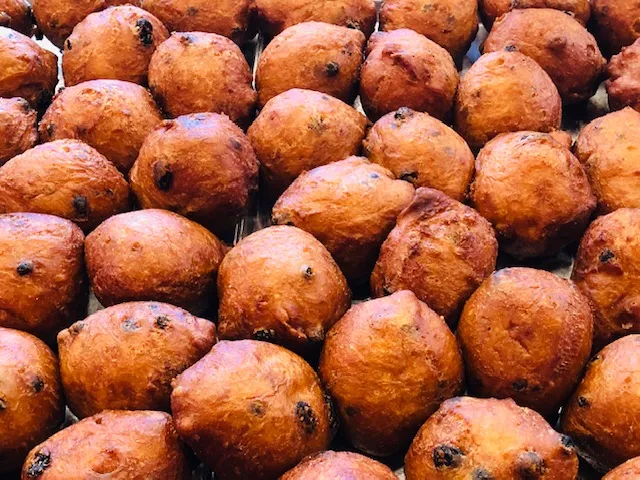
Let me introduce you to one of the most popular traditional Dutch food items: oliebollen (pronounced as o-lee-bollun). An oliebol is a sweet deep-fried delicacy that is primarily eaten during the cold winter months in October, November and December. Dutch oliebollen are made of flower, yeast, sugar, milk, oil and dusted with confectioner’s sugar (or powdered sugar). The Dutch oliebollen tradition goes back hundreds of years and first appeared in a Dutch cooking book in 1667.
About the author: Laura Daniëlle is co-founder of Comedy Walks: the most fun alternative walking tour of Amsterdam with a stand-up comedian as guide!
Back in the old days, oliebollen were limited to plain and raisin-filled options. Nowadays, you’ll encounter a variety of oliebollen featuring fillings like Nutella, pastry cream, rum, caramel, and more. Personally, I have a soft spot for the straightforward, no-nonsense oliebol, but from time to time, I do indulge in one with raisins. No matter your preference, it’s a golden rule to generously coat it with confectioner’s sugar!
How popular is the Dutch oliebollen tradition?
The Dutch oliebollen tradition is incredibly popular and firmly rooted in Dutch culture. The tradition is an essential part of Dutch holiday celebrations, with oliebollen being a staple treat during New Year’s Eve festivities. I am pretty sure that the average Dutch person has no clue about the annual consumption of oliebollen in the Netherlands. Bear in mind that it is only eaten during a 2-3-month period with a peak around New Years Eve. It is estimated that the Dutch, along with numerous tourists, consume over 100 million oliebollen each year! That is quite an accomplishment for a population of 17,2 million people. Don’t miss out on the opportunity to participate in the Dutch oliebollen tradition when you’re visiting Amsterdam during the colder months.
Where to find your oliebollen in Amsterdam?
Where can you find your oliebollen in Amsterdam? Oliebollen are either home-made, sold in bakery stores or at the numerous street carts that you’ll find around the city from October onwards. I strongly believe that each and every visitor to Amsterdam should try an oliebol at least once in a lifetime. Therefore, I made a huge sacrifice: I have done an oliebollen tasting at 19 oliebollen stalls/street carts in Amsterdam to make sure that you know where to get your much wanted oliebol. I would like to thank my friend Mareike who joined me during one of my oliebollen trips. I could do max 7 oliebollen in Amsterdam per day and needed a few days off before I could go on another oliebollen tasting journey.
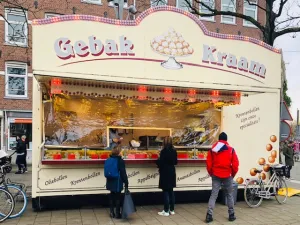
The best oliebollen Amsterdam
The perfect oliebol is a very personal matter, so it is not fair to say that a certain oliebol is good or bad. In my opinion, there is no such thing as the best oliebollen in Amsterdam. I would say that the best oliebollen in Amsterdam are the ones that are fluffy on the inside and crunchy on the outside. And there are plenty of places where you can find them. Here is my list of favourite oliebollen stalls or street carts in Amsterdam in random order:
#1 Hugo de Grootplein in West
This was the first oliebollen stall I tried in Amsterdam, and bingo, delicious! Corry and her husband Willem have been making oliebollen at this spot for the last 30 years! If oreo’s are your guilty pleasure, you should definitely stop by at this stall. And always a good sign: the owners love their own oliebollen and split a raisin and regular oliebol between the two of them per day. Their hours extend until 20:00, making it perfect for a post-dinner oliebol treat! They are open from 1 November onwards.
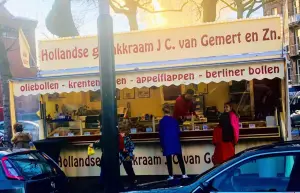
#2 Cornelis Troostplein in de Pijp
The owner of this oliebollen place is Jan whose grandparents started the oliebollen business more than 40 years ago. Jan is passionate about oliebollen and explains in detail how to make the perfect oliebollen with fruit (sorry, secret recipe). Fun fact: Jan starts his day with a hearty breakfast of three oliebollen! At Jan’s oliebollen stall I tried the delicious appelflap, a Dutch term that intriguingly translates to “apple envelope.” Jan kindly enlightened me about the distinction between an appelflap and an appelbeignet: both feature apples, but the former is prepared with dough while the latter uses puff pastry. Both take a delightful dip in the deep fryer.
Tevreden wandelaars

Interezand
Vandaag met een grotere groep een geweldige tour gekregen van Jelle. Wat een leuke manier om meer te leren over Utrecht. Zeker een aanrader. Ik heb enorm genoten.
Mark Krishan
De gids was grappig, vertelde interessante weetjes en we hebben een geweldige wandeling door Utrecht gemaakt.
Pim
De comedy walk in Utrecht gedaan. Geweldige tour. Leuke feitjes, goede verhalen en een grappige guide. Een aanrader voor iedereen die Utrecht bezoekt!
De optocht Schaijk
Zaterdag 20 september 2025 de comedy walk in Eindhoven gedaan. Prima ervaring: gezellig, gelachen en genoten! Zeker voor herhaling vatbaar.
Paulien van der Goes
Klantgerichtheid en service staan bij Laura hoog in het vaandel. Daar zouden een hoop bedrijven wat van kunnen leren! Daarom even mijn complimenten